

Can Gratitude Be Designed? The Psychology of Tipping in Kenya
Why do some guests who appreciate great service still leave without tipping? This article explores the psychology behind tipping in Kenya and how clear, voluntary digital options can make gratitude easier to act on.
Thenks Team
Thenks Team
Can Gratitude Be Designed? The Psychology of Tipping in Kenya
A guest can leave a Nairobi hotel, a Maasai Mara safari camp or a Diani resort genuinely grateful for the people who made the stay memorable, yet never leave a tip.
That apparent contradiction is easier to understand when we separate a feeling from an action. Gratitude may already be present, but acting on it takes a second set of decisions. Does the guest have cash? What amount is appropriate? Should the tip go to one person or the wider team? Is a service charge already included? Will the money reach the intended staff?
Every unanswered question adds friction. At a hurried checkout, even a grateful guest may decide to do nothing.
This is where thoughtful design matters. A hotel cannot manufacture sincere gratitude, and it should not try. It can, however, make appreciation easier to express. The goal is not to pressure guests into tipping. It is to offer a clear, voluntary route from “that person made my stay better” to “I would like to thank them”.
Can Gratitude Be Designed? The Psychology of Tipping in Kenya
Psychologists distinguish gratitude from a generally positive mood. In three experiments, Monica Bartlett and David DeSteno found that gratitude increased people’s willingness to help, including when helping involved a personal cost. A later meta-analysis brought together 91 studies involving 18,342 participants and found a moderate positive relationship between gratitude and prosocial behaviour.
That helps explain why a tip can feel different from an ordinary payment. The bill settles a price. A voluntary tip can acknowledge a human contribution that the price does not fully describe.
Tipping is still more complicated than a simple exchange of good service for money. Researcher Michael Lynn’s review presents it as a behaviour shaped by several possible motives, including rewarding service, helping workers, following social norms and managing how one is seen by others. The mix can change by person, occupation, setting and country.
For Kenyan hospitality businesses, that last point is important. A local guest, a first-time visitor from Europe and a frequent safari traveller from North America may arrive with different assumptions about whether to tip, whom to tip and how much to give. A single, imported script is unlikely to remove that uncertainty for everyone.
Guests looking for practical guidance on customary amounts and payment methods can use Thenks’ full guide to tipping in Kenya. The more specific question here is what happens at the moment a guest decides whether to act.
The way a choice is presented changes the choice
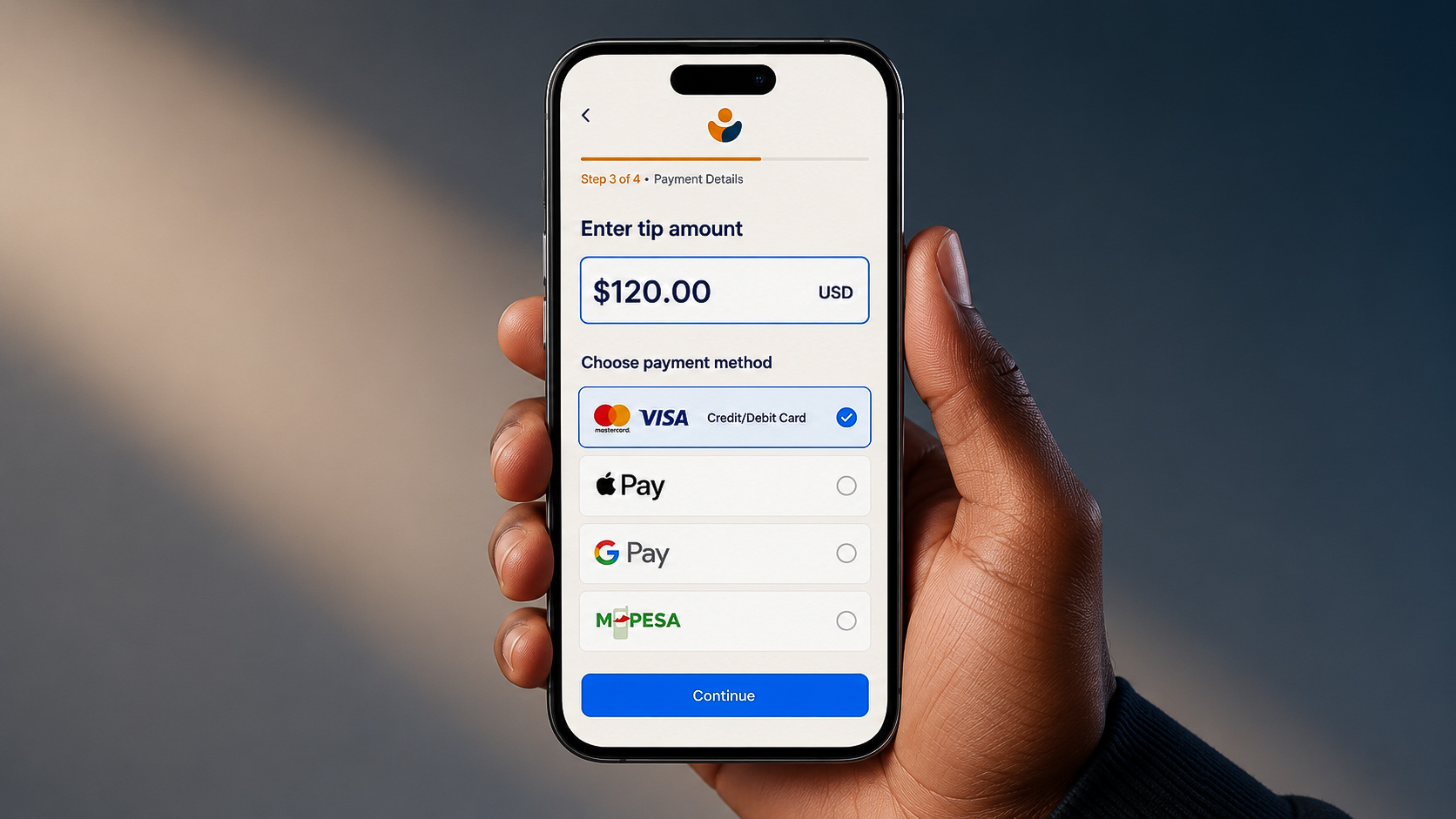
One of the clearest demonstrations comes from a study of more than 13 million New York City taxi rides. Researchers Kareem Haggag and Giovanni Paci found that default tip suggestions had a substantial effect on the amounts passengers left. They also found a warning for businesses: when the suggested amounts were set higher, a larger share of passengers chose to leave no credit-card tip at all.
A separate field experiment covering 94,571 orders for an app-based laundry service also found that recommended amounts affected how much customers tipped.
These studies were not conducted in Kenyan hotels, so their percentages should not be transplanted into a lodge or restaurant without local testing. Their broader lesson is more useful: a tipping screen is not neutral. Suggested amounts, labels and defaults shape the decision.
That creates a responsibility. If the interface makes the highest amount visually dominant, hides the custom option or makes “no tip” difficult to find, the business is no longer merely enabling appreciation. It is applying pressure.
Pressure can work against generosity
More prompting does not always produce more tipping. A field experiment and an online experiment published in the Journal of Business Research found that an explicit request to tip reduced tip size in the settings studied. The researchers traced the effect to social pressure and a reduced sense of control.
Research published in 2025 reached a related conclusion about tip suggestions presented by non-human agents, such as self-checkout machines and service robots. Across four experiments, perceived manipulative intent was associated with lower satisfaction and more negative word-of-mouth intentions.
Neither study proves that every digital tipping prompt will annoy a guest. The contexts, countries and technologies differ. Together, however, they support a sound hospitality principle: appreciation should feel invited, never extracted.
For a Kenyan hotel, lodge, camp or restaurant, that means the guest should be able to understand the choice, make it privately and decline it without embarrassment.
Meaning matters more than a generic payment request
Recent research also suggests that people respond to what a tip means, not only to the number on the screen. A 2026 *Journal of Consumer Research* paper analysed 176,237 food-delivery orders and reported nine experiments. It found that recommendations linked to a concrete, appropriate use made the consequences of tipping more vivid and strengthened the sense that the tip was a meaningful expression of gratitude. The effect weakened when the reference felt inappropriate.
Hotels should be careful about turning that result into sentimental copy about what an employee might buy. Staff should not become characters in a marketing story. A more respectful application is simple transparency: tell the guest who will receive the money and how it will be allocated.
“Tip the housekeeping team” carries more meaning than “Add 10%”. “Thank your guide directly” is clearer than an unexplained payment box. Where a property uses a shared staff fund, explaining that structure can help the guest understand how their appreciation reaches people whose work is often less visible.

Six principles for digital tipping in Kenyan hospitality
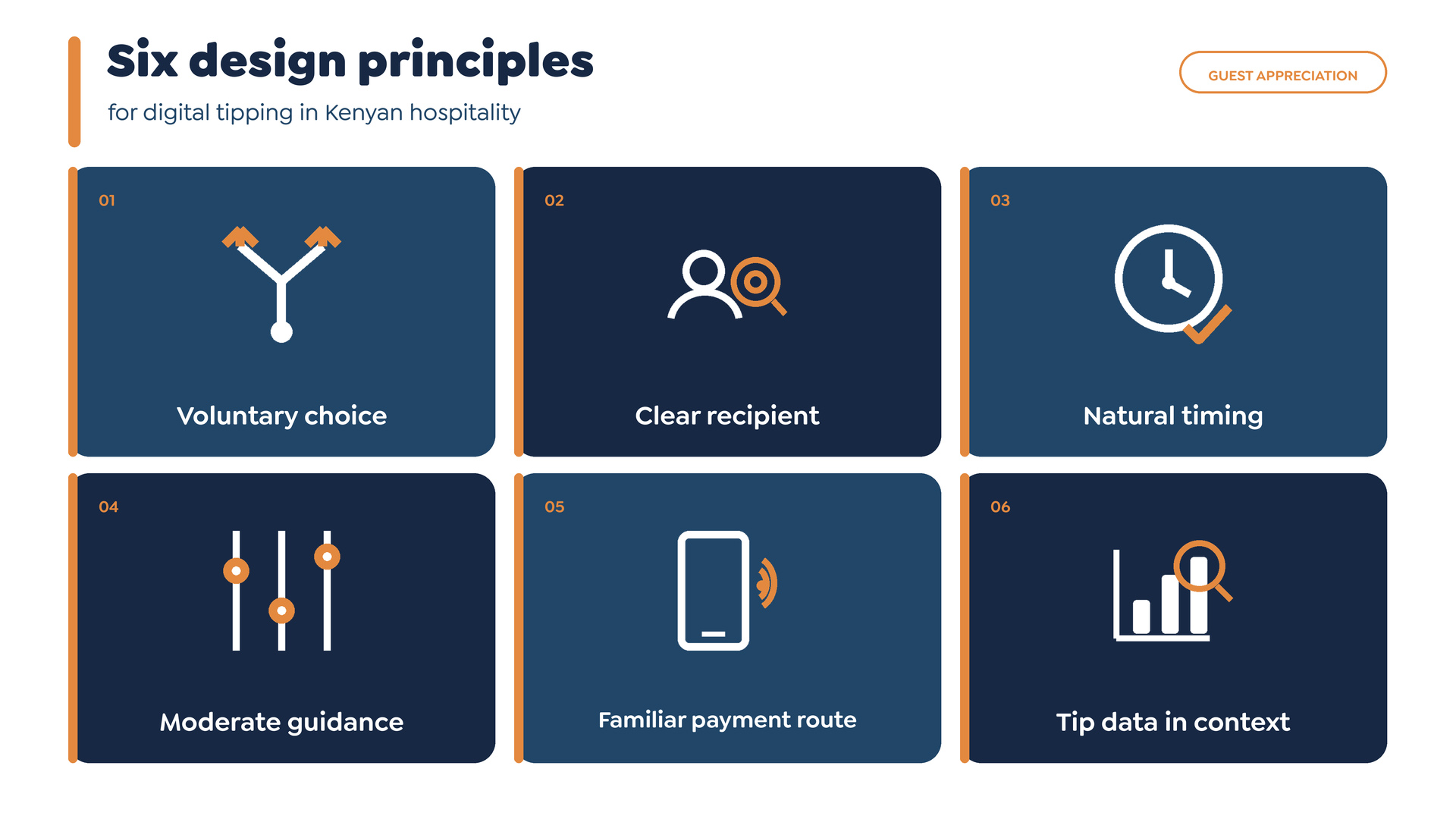
The evidence points towards a practical standard for properties considering QR code tipping or another cashless option.
1. Preserve a genuinely voluntary choice
Use calm language. Make custom amounts and the option not to tip easy to find. Do not use countdowns, warnings or copy that implies poor character if a guest declines.
2. Explain who receives the tip
Let the guest choose between a particular staff member, a department or a shared team fund where the property supports those options. If the money is pooled, say so. Clarity helps turn an abstract transaction into recognisable appreciation.
3. Present the option at a natural moment
A tipping opportunity belongs after the relevant service or near the end of the stay, when the guest can judge the experience. It should not interrupt an arrival, delay help or make service appear conditional on payment.
4. Treat suggested amounts as guidance, not a demand
Recommendations can reduce the effort of deciding, but high or aggressive defaults can backfire. Properties should use moderate options, retain a custom amount and test the experience with real guests rather than assuming one set of figures will suit every audience.
5. Make the payment route familiar
Guests should not need to download an unfamiliar app or search for an ATM simply to say thank you. A QR code can open a secure page that supports familiar card, wallet or mobile-money routes. The technology should shorten the path, not become the centre of the experience.
6. Do not use tips as a complete score of service quality
Tipping behaviour reflects more than service. It can also reflect culture, available funds, payment method, perceived norms and the way the choice is presented. One study in selected hotel restaurants in Kisumu County found no statistically significant relationship between tipping and the tangibility dimension of food-service quality. Its scope was limited, but the finding is a useful warning against treating tip totals as a universal performance rating.
Guest comments, direct feedback, repeat visits and operational quality checks still matter. Tip data can add context; it should not replace management judgement.
What ethical tipping design looks like in practice
Imagine two versions of the same checkout.
In the first, a staff member watches while a payment terminal displays three large percentage buttons. The lowest option is already selected, and declining requires another screen. The guest may still tip, but the moment carries social pressure.
In the second, a small card in the room or at reception says that tipping is optional. A QR code opens a page that identifies the staff member or team, explains where the money goes and offers sensible suggested amounts alongside a clear custom choice. The guest completes the payment privately using a familiar method and receives confirmation.
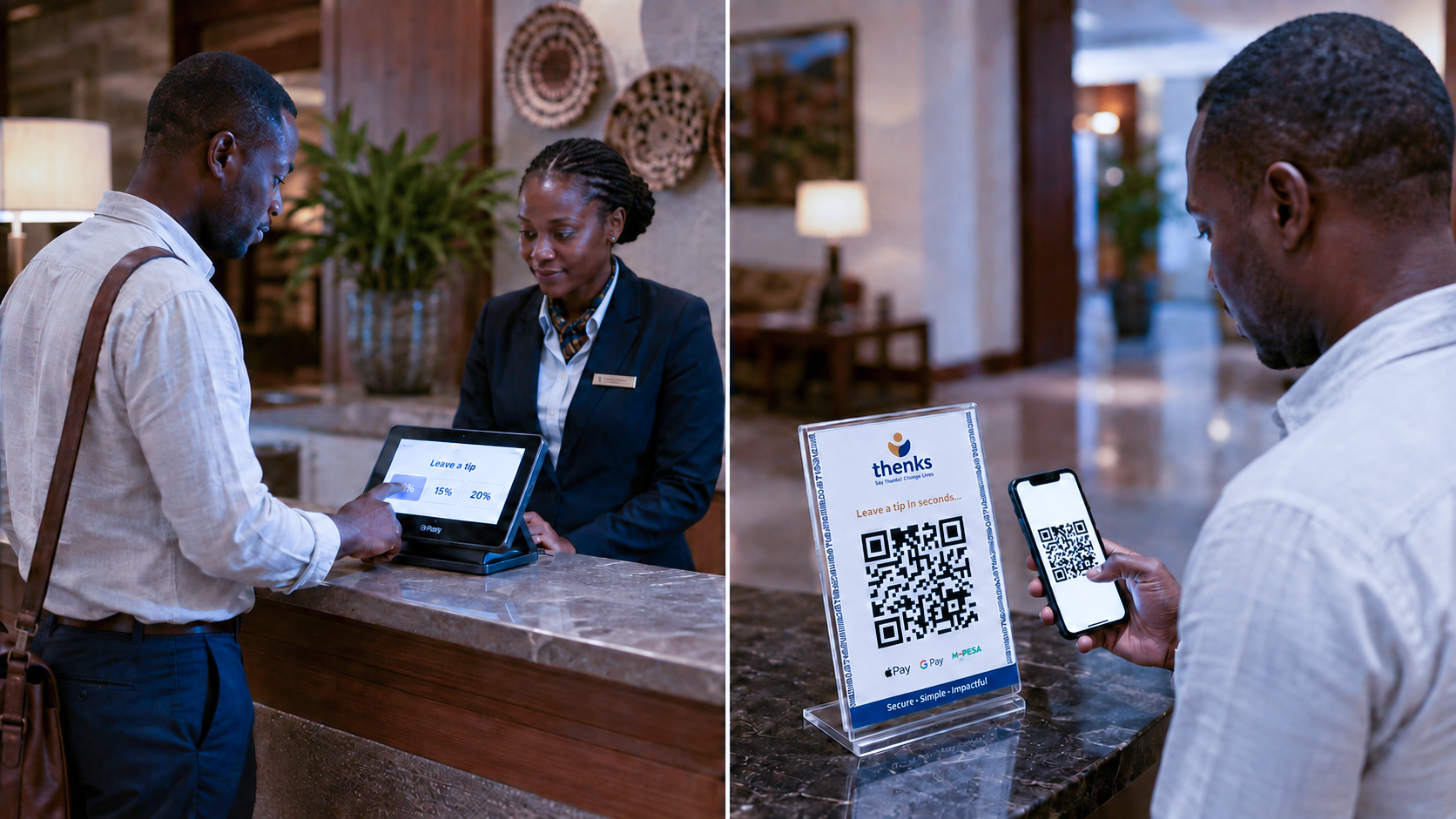
Both versions use technology. Only one is designed around the guest’s agency and the staff’s dignity.
That distinction is central to Thenks. Digital tipping should not make hospitality feel transactional. It should solve the practical problems that cause appreciation to go unexpressed: no cash, uncertainty about the recipient, a rushed departure or concern about distribution. Properties that use a shared approach can also explain how a digital TipJAR puts staff in control.
So can gratitude be designed?

Not exactly. Gratitude comes from the experience: the guide who noticed a guest’s curiosity, the housekeeper whose care was felt in small details, the waiter who handled an allergy without fuss, or the whole team that made a family feel welcome.
What can be designed is the path that follows.
Good tipping design removes uncertainty, protects choice and makes the recipient visible. Bad tipping design relies on embarrassment, inflated defaults or hidden exits. The difference is not cosmetic. It determines whether a digital prompt feels like a helpful invitation or an obligation.
For hospitality in Kenya, the strongest approach is also the simplest: make guest appreciation effortless, transparent and voluntary.